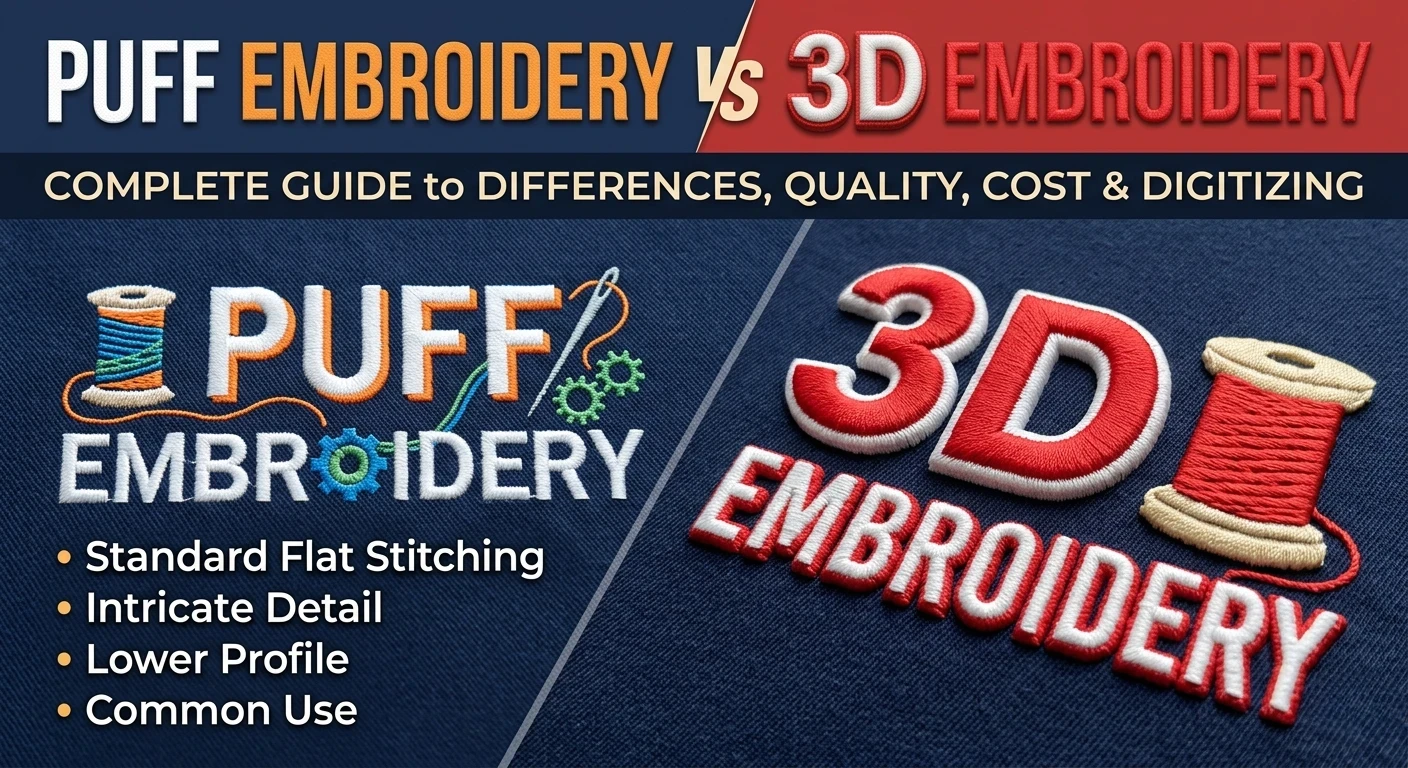
iconic stitches Embroidery has evolved from a simple decorative craft into a powerful branding and fashion tool. In today’s competitive apparel market, businesses and designers are constantly investigating how to make their designs stand out. That’s where puff embroidery and 3D embroidery come in.
Both techniques add depth, texture, and premium appeal to garments like caps, jackets, hoodies, and patches. But many people get confused. Are puff embroidery and 3D embroidery the same thing?
In this complete guide, we’ll break down:
- Key differences
- Quality factors
- Cost comparison
- Digitizing importance
- Best use cases
Along the way, we’ll also cover important topics like embroidery digitizing services, vector conversion services, PES file conversion, and hat digitizing services in USA.
What is Puff Embroidery?
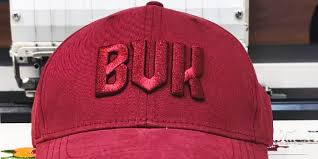
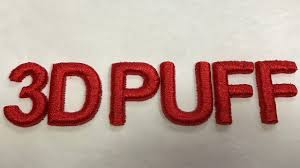
Puff embroidery is a technique where foam is placed under stitches to create a raised effect. It is most commonly used on:
- Caps
- Hats
- Logos
- Lettering
The foam lifts the stitches, giving a soft 3D look.
🔹 Key Features:
- Medium height (not too raised)
- Smooth finish
- Clean and bold appearance
- Ideal for simple designs
Puff embroidery is widely used with hat embroidery machines and is especially popular in hat digitizing services in USA.
What is 3D Embroidery?
3D embroidery takes dimensional stitching to a higher level. Instead of just foam, it uses:
- Dense stitching
- Layering techniques
- Advanced digitizing
- This creates a more sculpted, bold, and premium look.
🔹 Key Features:
- High raised effect
- Strong texture
- Luxury appearance
- Complex design capability
It is often used in:
- Premium branding
- High-end fashion
- Custom apparel
Puff vs 3D Embroidery: Key Differences
1. Height & Texture
- Puff → Soft and moderate lift
- 3D → High and bold structure
2. Stitching Style
- Puff → Foam + standard stitching
- 3D → Dense stitching + layering
3. Design Complexity
- Puff → Simple logos & text
- 3D → Detailed and complex artwork
4. Cost
- Puff → More affordable
- 3D → More expensive
- embroidery cost
5. Best Use
- Puff → Caps & hats
- 3D → Premium apparel
Role of Embroidery Digitizing
No matter which technique you choose, everything depends on digitizing.
What is Digitizing?
It is the process of converting artwork into a machine-readable file like:
- DST
- PES
- EXP
Without proper digitizing, embroidery will fail.
Why Digitizing is Important
- Controls stitch direction
- Sets stitch density
- Defines design structure
- Prevents thread breaks
Professional embroidery digitizing services USA ensure:
✔ Clean stitching
✔ Perfect alignment
✔ Machine compatibility
Hat Digitizing Services USA Market
Caps and hats require special embroidery digitizing because of their curved surface.
Features of Hat Digitizing:
- Center-out stitching
- Strong underlay
- Balanced density
That’s why businesses prefer the following:
- Hat digitizing services USA
- Hat digitizing services in America
- Hat digitizing USA experts
Digitizing Programs & Tools
Professional digitizers use advanced software:
Popular Digitizing Programs:
- Wilcom
- Hatch
- Pulse
- Brother PE Design
These tools help create:
- Perfect stitch paths
- Clean embroidery files
- Accurate designs
PES File & Conversion
Embroidery machines need special formats like PES files.
Important Topics:
- PES file converter → converts designs
- How to turn PNG into PES → common need
- JPG vs PNG → PNG preferred for quality
Before digitizing, images often go through the following:
Raster to vector conversion
Vector Conversion Services
Before digitizing, artwork must be clean.
Why Vector is Important:
- Scalable quality
- Clean lines
- Better stitch accuracy
Common Services:
- Vector conversion services USA
- Raster to vector (raster to vector)
- Logo redesign
Embroidery Stitches Explained
Different stitch types are used:
- Satin stitch → letters
- Fill stitch → large areas
- Run stitch → outlines
Proper applique embroidery stitches selection is key for quality.
Thread & Materials
Thread quality also matters.
Popular Thread:
- Polyester
- Rayon
- Example: The Gutermann thread chart helps match colors professionally.
Best Embroidery Machines
For commercial work:
Best Commercial Embroidery Machines:
- Tajima
- Barudan
- Brother PR Series
These are used in:
- Commercial embroidery services
- Large-scale production
Printed Patch vs Embroidered Patch
Many people compare:
Printed Patch:
- Cheaper
- Flat look
- Less durable
Embroidered Patch:
- Premium feel
- Long-lasting
- Textured
Winner: Embroidered patches Digitizing for branding
Cost Comparison
Puff Embroidery:
- Lower cost
- Less thread usage
- Faster production
3D Embroidery:
- Higher cost
- More time
- Premium result
Cheapest Digitizing vs Professional Quality
Many people search for:
Cheapest digitizing
But cheap digitizing can cause:
- Broken stitches
- Bad design
- Fabric damage
Always choose professional embroidery digitizing USA
Commercial Embroidery Services
Businesses use embroidery for:
- Branding
- Uniforms
- Promotions
Professional services provide the following:
- Bulk production
- Fast turnaround
- Consistent quality
Choosing the Right Technique
Choose Puff if:
✔ You want simple logo
✔ Budget is limited
✔ Caps & hats
Choose 3D if:
✔ You want premium look
✔ Complex design
✔ High-end branding
Final Thoughts
Puff and 3D embroidery both offer incredible value in the world of custom apparel. The choice depends on your:
- Budget
- Design
- Branding goals
However, one thing remains constant:
Quality digitizing is everything
Without proper embroidery digitizing services, even the best design will fail.
Conclusion
Embroidery is not just decoration—it’s branding, identity, and craftsmanship.
From:
- Hat embroidery machines
- To vector conversion services
- To PES file conversion
Every step matters.
If done right, embroidery can:
✔ Increase product value
✔ Improve brand image
✔ Create long-lasting impressions more.