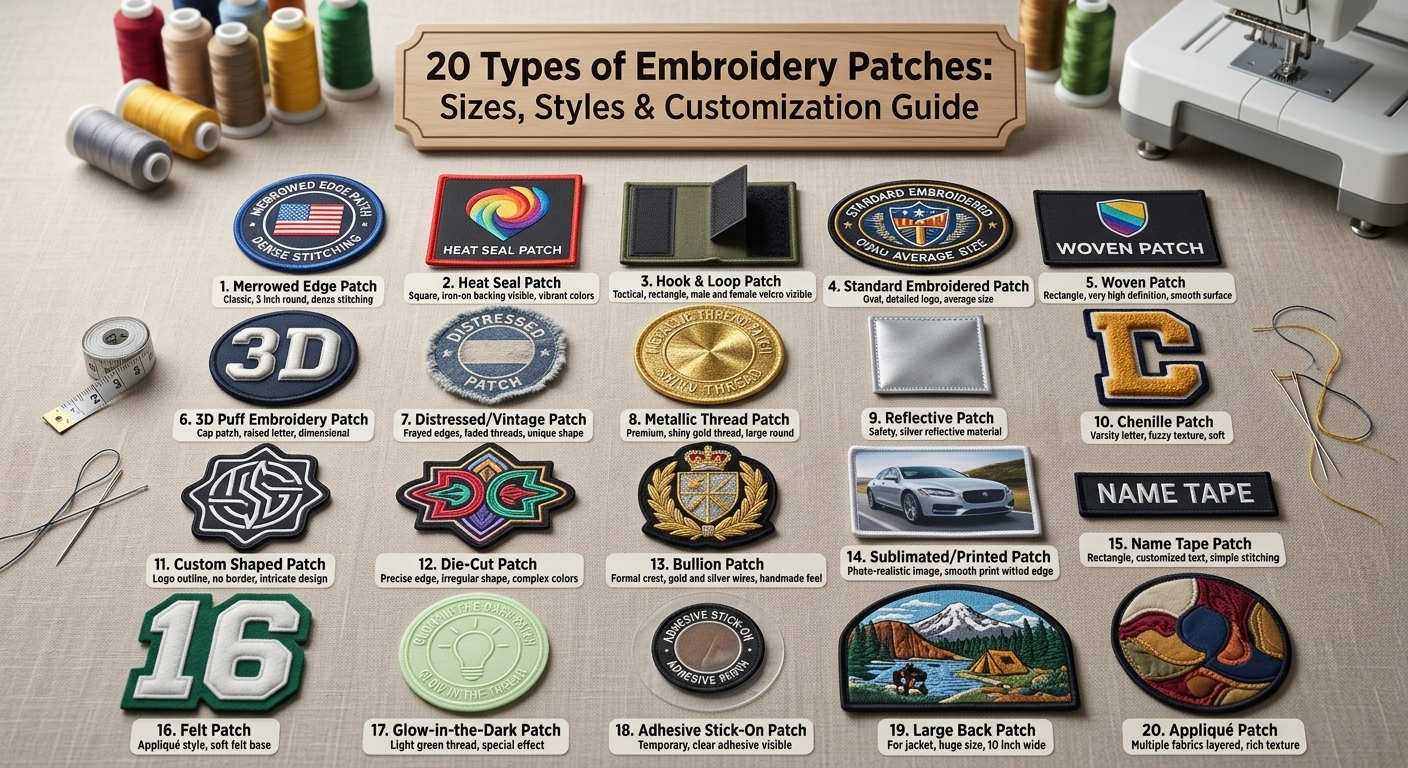
Iconic Stitches believes embroidery patches are one of the best ways to personalize clothing, uniforms, jackets, hats, bags, and accessories. They allow individuals, businesses, sports teams, motorcycle clubs, and organizations to display logos, names, artwork, symbols, and unique designs without embroidering directly onto the garment. From traditional embroidered logo patches to modern 3D puff, chenille, leather, and PVC patches, there are numerous options available for different applications. At Iconic Stitches, we help customers choose the right patch type with professional embroidery digitizing, customization, and high-quality patch solutions..
Choosing the right patch involves more than selecting an attractive design. Before ordering, customers should consider the patch material, size, shape, backing, stitching style, border, colors, and intended use. Some patches are designed to be sewn onto garments, while others feature iron-on adhesive, hook-and-loop backing, or other attachment methods.
The production process also matters. A custom embroidered patch generally starts with artwork preparation, followed by embroidery digitizing, material selection, machine setup, stitching, cutting, border finishing, backing application, and quality inspection. Understanding these steps helps customers make better decisions and receive patches that match their expectations.
In this guide, we will explore 20 popular types of patches, explain how they are made, where they are used, how customization works, and what customers should know before placing an order.
1. Embroidered Logo Patches
Embroidered logo patches are among the most popular choices for businesses, clothing brands, sports teams, and organizations. They display company logos, brand names, symbols, and custom artwork using colored embroidery threads stitched onto a fabric base.
Materials and Production: These patches are commonly made using twill or other embroidery-friendly fabrics. The artwork is converted into a digital embroidery file through digitizing. The embroidery machine follows the programmed stitch paths to reproduce the design.
Sizes and Stitching: Common sizes include 2, 3, 4, and 5 inches, although customers can request custom dimensions. Stitch counts depend on the artwork, size, and level of detail. Satin stitches, fill stitches, and running stitches are commonly used.
Customization and Uses: Customers can customize the shape, thread colors, border, backing, and logo placement. These patches are commonly used on uniforms, jackets, hats, backpacks, workwear, and promotional clothing.
2. 3D Puff Embroidery Patches
3D puff embroidery patches feature raised designs that create a dimensional appearance. They are particularly popular for bold lettering, sports logos, clothing brands, and streetwear designs.
Materials and Production: These patches use embroidery foam underneath selected areas of the design. The foam is covered with embroidery thread, creating a raised effect. Digitizing is especially important because stitch density, underlay, and pull compensation must be planned correctly.
Sizes and Stitching: They can be produced in different custom sizes, depending on the design and application. Satin stitches are commonly used to cover the foam, while other areas may use fill stitches.
Customization and Uses: Customers can choose raised lettering, logos, thread colors, shapes, and borders. These patches are frequently used on baseball caps, snap backs, varsity jackets, hoodies, and street wear.
3. Chenille Patches
Chenille patches are recognized for their soft, textured, and fuzzy appearance. They are traditionally associated with varsity jackets, school clothing, sports teams, and collegiate fashion.
Materials and Production: Chenille yarn is used to create a raised, textured surface. Felt, twill, or other suitable fabrics may be used as the base. Depending on the design, additional embroidery can be added to create outlines, letters, and decorative details.
L Sizes and Stitching: Popular dimensions include 3, 4, 5, and 6 inches, with larger custom designs also available. Chain-style stitching and additional satin embroidery are often used for detailing.
Customization and Uses: Chenille patches can be customized with school initials, numbers, team logos, mascots, and brand names. They are commonly attached to varsity jackets, sweaters, Letterman jackets, and sportswear.
4. Applique Embroidery Patches
Applique embroidery patches combine fabric pieces with decorative embroidery to create attractive designs. Instead of covering the entire design area with thread, selected fabric sections are cut and attached to a base.
Materials and Production: Materials can include twill, felt, cotton, and other suitable fabrics. The production process involves placing the fabric pieces, securing them with stitches, trimming excess material, and finishing the edges.
Sizes and Stitching: These patches can be made in small logo sizes or larger decorative shapes. Satin stitches are frequently used around fabric edges, while running stitches can secure individual sections.
Customization and Uses: Customers can select multiple fabric colors, shapes, letters, and embroidered details. Applique patches are suitable for jackets, uniforms, hats, bags, sportswear, and fashion garments.
5. Merrowed Edge Patches
Borrower edge patches feature a thick, rounded stitched border that gives the patch a clean and traditional finish. This border protects the outer edges and helps maintain the patch’s shape.
Materials and Production: These patches are usually made with embroidered fabric mounted on a suitable backing. After the design is stitched, the patch is cut into its required shape and finished with a borrower border using specialized overstock stitching equipment.
Sizes and Stitching: They are available in different dimensions, commonly around 2 to 5 inches. The embroidered design may include satin, fill, and running stitches.
Customization and Uses: Customers can choose circular, square, rectangular, and other suitable shapes. Borrower borders are particularly common on military insignia, club patches, uniform logos, and organization badges.
6. Laser-Cut Embroidery Patches
Laser-cut embroidery patches are produced using laser technology to achieve precise shapes and detailed edges. They are useful when traditional rounded borders are not suitable for the artwork.
Materials and Production: Embroidered fabric is prepared first, and laser equipment cuts the patch into its required outline. Heat-salable backing may also be applied to help prevent fraying.
Sizes and Stitching: These patches can be manufactured in small or large custom dimensions. Stitch types depend on the artwork and may include satin, fill, and running stitches.
Customization and Uses: Customers can request intricate shapes, lettering, symbols, and custom outlines. They are commonly used on tactical clothing, uniforms, sportswear, backpacks, and promotional apparel.
7. Iron-On Embroidery Patches
Iron-on patches are designed for convenient attachment using a heat-activated adhesive backing. They allow customers to apply patches without sewing them manually.
Materials and Production: The front side is embroidered onto fabric, while a heat-sensitive adhesive is applied to the back. During application, heat activates the adhesive and helps bond the patch to the garment.
Sizes and Stitching: They are available in different sizes, from small decorative patches to larger jacket designs. Stitching depends on the artwork and can include satin and fill stitches.
Customization and Uses: Customers can customize colors, shapes, logos, and dimensions. Iron-on patches are popular for denim jackets, jeans, shirts, backpacks, and casual clothing.
For application, place the patch on clean, dry fabric, cover it with a protective cloth, and follow the adhesive manufacturer’s recommended temperature and pressing time. Some fabrics require sewing for a stronger hold.
8. Sew-On Embroidery Patches
Sew-on patches are traditional patches attached to garments using needle and thread or a sewing machine. They are a reliable option for customers who prefer a permanent attachment.
Materials and Production: These patches can use twill, felt, cotton, or other embroidery-friendly materials. The artwork is digitized, stitched, cut, and finished before delivery.
Sizes and Stitching: They are available in virtually any practical custom size. Satin, fill, and running stitches can be selected according to the artwork.
Customization and Uses: Customers can request custom logos, text, shapes, borders, and colors. They are suitable for jackets, work uniforms, military clothing, school garments, and bags.
To attach them, position the patch, secure it with pins, and stitch around its edges. A sewing machine or hand stitching can be used.
9. Velcro Embroidery Patches
Velcro patches use hook-and-loop backing, allowing customers to attach and remove patches whenever needed. They are especially useful for uniforms and equipment that require interchangeable identification.
Materials and Production: The front side is embroidered onto fabric, while hook or loop material is attached to the back. Some designs include a separate loop panel that can be sewn onto a garment.
Sizes and Stitching: Common dimensions include 2 × 3 inches, 3 × 3 inches, and 3 × 4 inches, but custom sizes are available. Stitch types depend on the design.
Customization and Uses: Customers can customize names, identification numbers, logos, flags, and symbols. These patches are widely used on tactical uniforms, backpacks, military-style clothing, and outdoor equipment.
10. Woven Patches
Woven patches are created by weaving fine threads together instead of using traditional embroidery stitching. This method makes them suitable for detailed artwork, small lettering, and intricate designs.
Materials and Production: Fine polyester or similar threads are woven into a fabric structure using specialized looms. The finished design is cut and supplied with a suitable backing.
Sizes and Stitching: Woven patches can be produced in small dimensions where traditional embroidery might struggle to reproduce fine details. They do not use conventional embroidery stitch counts because the artwork is woven.
Customization and Uses: Customers can choose different shapes, thread colors, borders, and backing options. They are commonly used on fashion labels, clothing brands, hats, bags, and promotional products.
11. Printed Embroidery Patches
Printed patches use printing techniques to reproduce artwork, photographs, gradients, and detailed color combinations. They are different from traditional embroidered patches, although they can have embroidered borders or decorative stitching.
Materials and Production: A suitable fabric base receives the printed artwork through a selected printing process. The edges can be finished with stitching or other methods.
Sizes and Stitching: They can be made in different custom dimensions. The printed surface itself does not require embroidery stitches, although decorative borders may include stitching.
Customization and Uses: Customers can request full-color artwork, photographs, complex logos, and detailed illustrations. They are used on promotional clothing, bags, uniforms, and fashion accessories.
12. PVC Patches
PVC patches are made from flexible polyvinyl chloride material. They have a rubber-like appearance and are valued for their durability, raised details, and resistance to moisture.
Materials and Production: PVC material is shaped using molds based on the approved artwork. Different colors and raised or recessed sections can be incorporated into the design.
Sizes and Stitching: These patches are available in different thicknesses and dimensions. They are not produced through traditional embroidery stitching because the design is molded rather than sewn.
Customization and Uses: Customers can choose custom shapes, colors, logos, and 2D or 3D effects. PVC patches are commonly used on outdoor clothing, tactical gear, backpacks, sports equipment, and accessories.
13. Leather Patches
Leather patches provide a premium and distinctive appearance. They are especially popular among denim brands, fashion labels, outdoor clothing manufacturers, and businesses looking for a sophisticated finish.
Materials and Production: Genuine leather or synthetic leather can be used. Designs are created using techniques such as engraving, embossing, debossing, printing, or embroidery, depending on the selected material.
Sizes and Stitching: Common sizes include 2 × 2 inches, 2 × 3 inches, and 3 × 4 inches, although custom dimensions are possible. Edge stitching can be added when required.
Customization and Uses: Customers can personalize patches with brand names, logos, text, and decorative borders. They are commonly attached to jeans, leather jackets, hats, bags, and workwear.
14. Bullion Embroidery Patches
Bullion patches are premium decorative patches made using metallic threads and specialized embroidery techniques. They are often associated with ceremonial uniforms, military insignia, and formal organizational badges.
Materials and Production: Metallic bullion wire, specialized threads, backing materials, and decorative elements are carefully arranged and secured to create raised designs.
Sizes and Stitching: They are available in custom dimensions depending on the insignia or artwork. Traditional bullion work uses specialized hand techniques rather than ordinary machine embroidery alone.
Customization and Uses: Designs can include detailed emblems, symbols, crests, and lettering. These patches are commonly used for formal uniforms, military-style insignia, ceremonial clothing, and institutional badges.
15. Sequin Embroidery Patches
Sequin patches feature decorative sequins that add shine and visual appeal. They are frequently used in fashion garments, performance clothing, and decorative accessories.
Materials and Production: Sequins are attached to a fabric base using embroidery techniques or specialized sequin equipment. Additional embroidery can be added to create lettering, outlines, and patterns.
Sizes and Stitching: They can be made in different shapes and sizes. Running stitches and other securing stitches may be used to attach the decorative elements.
Customization and Uses: Customers can choose sequin colors, shapes, patterns, and embroidered details. These patches are popular on jackets, dresses, stage costumes, bags, and fashion accessories.
16. Glow-in-the-Dark Patches
Glow-in-the-dark patches contain special materials that absorb light and release it gradually in darker environments. They are designed for decorative visibility and specialized applications.
Materials and Production: Depending on the product, phosphorescent threads, printed materials, or other glow-producing components may be used. The selected material is incorporated into the patch design.
Sizes and Stitching: Custom dimensions are available. Embroidered versions can use satin, fill, and running stitches, depending on the design.
Customization and Uses: Customers can request logos, symbols, lettering, and decorative patterns. They are suitable for selected outdoor clothing, novelty apparel, bags, and promotional products. Actual glow performance depends on the materials used and exposure to light.
17. Reflective Embroidery Patches
Reflective patches are designed to reflect incoming light, helping make selected details more noticeable in low-light environments.
Materials and Production: Reflective fabric, reflective thread, or reflective film can be incorporated into the design. Some versions feature embroidered outlines around reflective sections.
Sizes and Stitching: They can be produced in different custom dimensions. Satin and running stitches may be used for embroidery details, depending on the selected construction.
Customization and Uses: Customers can customize logos, symbols, lettering, shapes, and reflective sections. They are commonly used on workwear, safety clothing, cycling garments, outdoor jackets, and backpacks.
18. Name and Letter Patches
Name and letter patches are personalized designs featuring individual names, initials, numbers, or words. They are commonly ordered by schools, sports teams, companies, and individuals.
Materials and Production: Twill, felt, and other suitable fabrics are commonly used as the base. Letters and numbers are created through embroidery digitizing and machine stitching.
Sizes and Stitching: Popular dimensions include 1 × 3 inches, 2 × 4 inches, and other custom sizes. Satin stitches are frequently used for lettering, while fill stitches may be used for larger characters.
Customization and Uses: Customers can select fonts, thread colors, border styles, names, and numbers. These patches are popular on uniforms, jackets, hats, school bags, and workwear.
19. Military Embroidery Patches
Military patches are designed to represent units, ranks, divisions, flags, and organizational identities. They often feature detailed symbols, text, and distinctive color combinations.
Materials and Production: Twill and other durable fabric bases are commonly used. The artwork is converted into an embroidery file, followed by machine stitching, cutting, and border finishing.
Sizes and Stitching: Dimensions vary according to the intended uniform and insignia requirements. Satin, fill, and running stitches are commonly used.
Customization and Uses: Designs may include flags, unit names, identification numbers, and approved insignia. They are used on authorized uniforms, organizational clothing, tactical-style apparel, and equipment.
20. Motorcycle Club Embroidery Patches
Motorcycle club patches are distinctive designs worn by motorcycle enthusiasts and clubs. They commonly feature club names, logos, symbols, and large back designs.
Materials and Production: Twill and durable embroidery fabrics are frequently selected. Larger artwork is digitized and stitched using suitable embroidery machines. Multiple design sections may be produced separately when needed.
Sizes and Stitching: Small chest patches can be around 3 to 5 inches, while larger back patches can measure 10 to 12 inches or more. Actual dimensions depend on the jacket and design.
Customization and Uses: Customers can choose club names, logos, lettering, colors, shapes, and borders. These patches are commonly used on leather jackets, denim vests, riding gear, and club apparel.
How Are Custom Embroidery Patches Made?
Creating custom embroidered patches involves several stages. Understanding the complete production process helps customers communicate their requirements and avoid mistakes.
Step 1: Select Your Patch Type
Start by choosing the patch construction that matches your requirements. Decide whether you need a traditional embroidered patch, 3D puff, chenille, applique, woven, PVC, or another style.
Consider where the patch will be used, how frequently it will be handled, and whether it needs to withstand washing, outdoor exposure, or regular wear.
Step 2: Prepare Your Artwork and Logo
Provide your original logo, artwork, or design to the digitizing provider. High-resolution PNG, JPG, PDF, SVG, AI, and EPS files can be useful depending on the artwork and available workflow.
If you do not have a finished design, you can request professional artwork preparation or vector conversion before embroidery digitizing.
Step 3: Embroidery Digitizing Process
Embroidery digitizing is the process of converting artwork into a machine-readable embroidery file. The digitizer determines the stitch types, stitch direction, density, underlay, sequencing, and other technical settings.
Common embroidery formats include DST, PES, JEF, EXP, and HUS. The required format depends on the embroidery machine.
Good digitizing is important because an improperly prepared file can result in thread breaks, poor lettering, fabric puckering, gaps, or uneven stitching.
Step 4: Choose Patch Size and Shape
Decide the finished width and height of your patch. Common options include 2, 3, 4, 5, and 6 inches, while larger designs can be made for jacket backs and special applications.
You can select circular, rectangular, square, oval, shield-shaped, or completely custom outlines.
Always check the available space on your garment before confirming the dimensions.
Step 5: Select Fabric, Threads, and Stitching
Choose the base material and thread colors according to your artwork and intended use.
Common embroidery stitches include:
- Satin Stitch: Suitable for borders, lettering, and narrow design elements.
- Fill Stitch: Used for larger areas that need thread coverage.
- Running Stitch: Suitable for outlines and fine details.
- Chain Stitch: Often used for decorative and textured designs.
- Applique Stitching: Used to secure fabric pieces within a design.
Stitch counts are not fixed for every patch. A small, simple logo may require a few thousand stitches, while a large, detailed patch can require tens of thousands. The actual count depends on dimensions, density, artwork, and stitch style.
Step 6: Select the Patch Backing
The backing determines how the patch will be attached to clothing or accessories.
Common options include:
- Iron-On Backing: Uses heat-activated adhesive for convenient application.
- Sew-On Backing: Designed for traditional stitching onto garments.
- Velcro Backing: Allows patches to be removed and replaced.
- Adhesive Backing: Provides temporary or application-specific attachment.
- Heat-Seal Backing: Uses heat to bond the patch to suitable fabric.
The right backing depends on the garment material, intended use, and required durability.
Step 7: Machine Setup and Patch Production
Once the artwork has been digitized and approved, the embroidery file is loaded into the machine. The operator selects the correct threads, stabilizer, fabric, hoop, and machine settings.
The machine follows the digitized instructions to stitch the design. After stitching, patches are cut into their required shapes, and the selected border and backing are applied.
Step 8: Quality Inspection and Final Finishing
Each patch should be inspected for loose threads, missing stitches, incorrect colors, uneven borders, fabric damage, and overall design accuracy.
Any required corrections should be completed before packaging. A sample approval can also help confirm the appearance before a larger production order.
How to Order Custom Embroidery Patches
Ordering custom patches becomes easier when you prepare your requirements before contacting a supplier.
1. Share Your Design: Send your logo, artwork, text, or reference image.
2. Select the Patch Type: Choose embroidered, 3D puff, chenille, applique, leather, PVC, or another construction.
3. Confirm the Size: Specify the width and height in inches or centimeters.
4. Choose Colors and Borders: Select thread colors, fabric colors, edge finishing, and other design details.
5. Select the Backing: Decide between iron-on, sew-on, Velcro, or another suitable option.
6. Request a Quote: Ask for pricing based on size, quantity, design complexity, and finishing requirements.
7. Approve the Design: Review the digitized artwork or production proof before manufacturing.
8. Complete Production: The supplier prepares the patches according to the approved specifications.
9. Inspection and Shipping: Finished patches are checked, packaged, and shipped to the delivery address.
Before placing a large order, ask about minimum quantities, sample availability, production timelines, shipping costs, and revision policies.
How Many Embroidery Patches Can You Order?
Custom embroidery patches can be ordered in different quantities depending on the supplier’s production requirements. Some providers accept single-piece orders, while others offer better pricing for bulk quantities.
For example, you might request 10, 25, 50, 100, or 500 patches. Larger orders can reduce the cost per patch, although actual pricing depends on size, stitch count, materials, backing, and production complexity.
If you are ordering patches for a clothing brand, business, school, or motorcycle club, consider ordering a sample before approving a large production run.
Where Can You Use Custom Embroidery Patches?
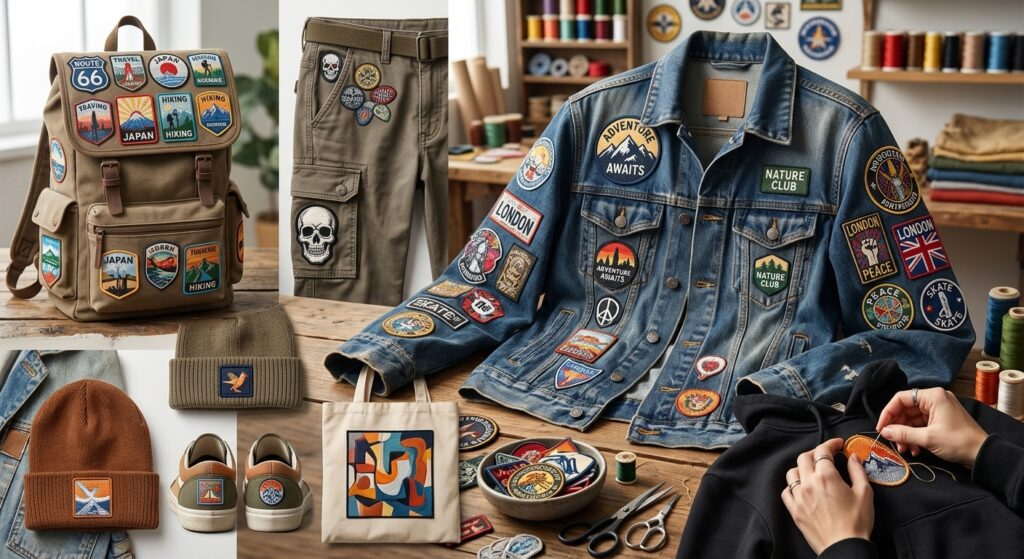
Custom patches can be applied to many types of clothing and accessories, including:
- Denim and leather jackets
- Hoodies and sweatshirts
- Baseball caps and snapbacks
- School and sports uniforms
- Corporate workwear
- Military-style clothing
- Motorcycle club vests
- Backpacks and travel bags
- Jeans and trousers
- Promotional clothing
- Fashion accessories
- Team and organization apparel
Patches can be attached through sewing, heat application, hook-and-loop backing, or other suitable methods. Always check the fabric and backing compatibility before applying them.
Conclusion: Choose the Right Custom Patch for Your Needs
Custom embroidery patches offer an effective way to display logos, names, artwork, and personal designs on different garments and accessories. Whether you prefer embroidered logo patches, raised 3D puff designs, textured chenille, applique, or removable Velcro patches, the right option depends on your design, material, budget, and intended application.
Before placing an order, consider patch size, fabric, thread colors, stitch count, border style, backing, and production requirements. Professional embroidery digitizing also plays an important role in achieving clean stitching and accurate design reproduction.
With the right artwork preparation, digitizing, materials, and quality inspection, custom patches can provide a professional finish for clothing brands, businesses, sports teams, clubs, and individual customers. GET FREE QOUTE